


Overview
Context
Coping with persistent daily nerve pain presents significant challenges, and the process of locating medical professionals to accurately recognize and address this pain requires considerable time and dedication.
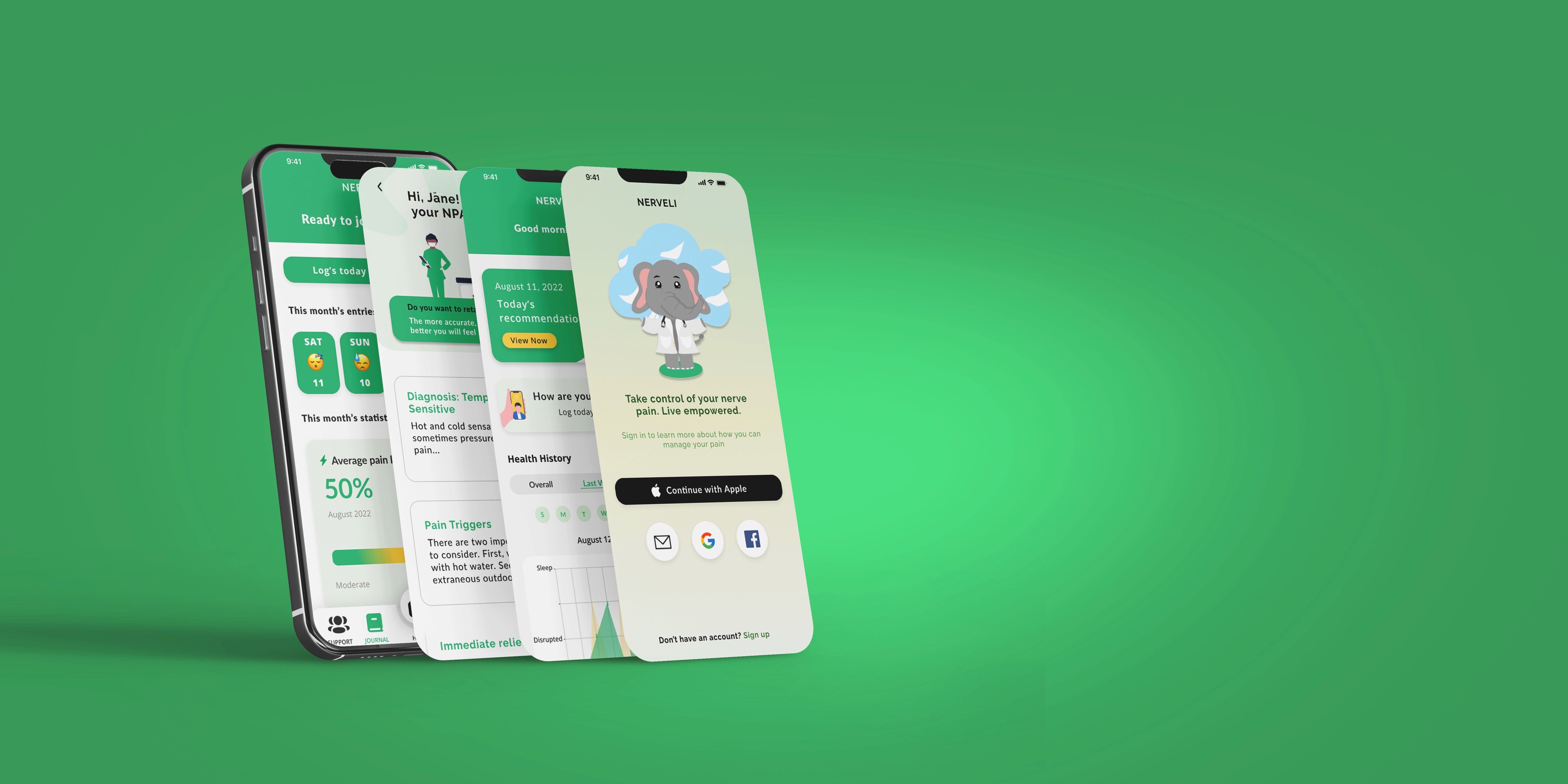
Nerveli is an innovative app designed to pinpoint your pain using the Nerveli Pain Assessment. This tool, put together by a team of neurologists, aims to bridge the divide between patients and doctors, facilitating improved diagnosis, treatment, and informative resources. Following the assessment, AI will formulate a customized daily regimen, adapting to your pain intensity and specific condition.
The Problem
50 Million
Suffer from chronic pain
$300 Billion
Economic productivity lost due to chronic pain
20 Million
People can't work due to chronic pain
Chronic pain is a significant problem that is only getting worse in the United States. According to the CDC, 50 million Americans (approx. 20% of the nation) suffer from chronic pain at any given time. Twenty million of those people suffer from what is called high-impact pain that is frequently driven by nerve pain caused by trauma, metabolic disease, chemotherapy treatment, or even unknown factors. Low back pain is the single biggest cause of chronic pain and is often associated with nerve pain.
Based on this research, the need exists for consumers to understand why they are hurting, communicate their pain to healthcare providers, and create a plan for reducing their pain burden.
Project Goals
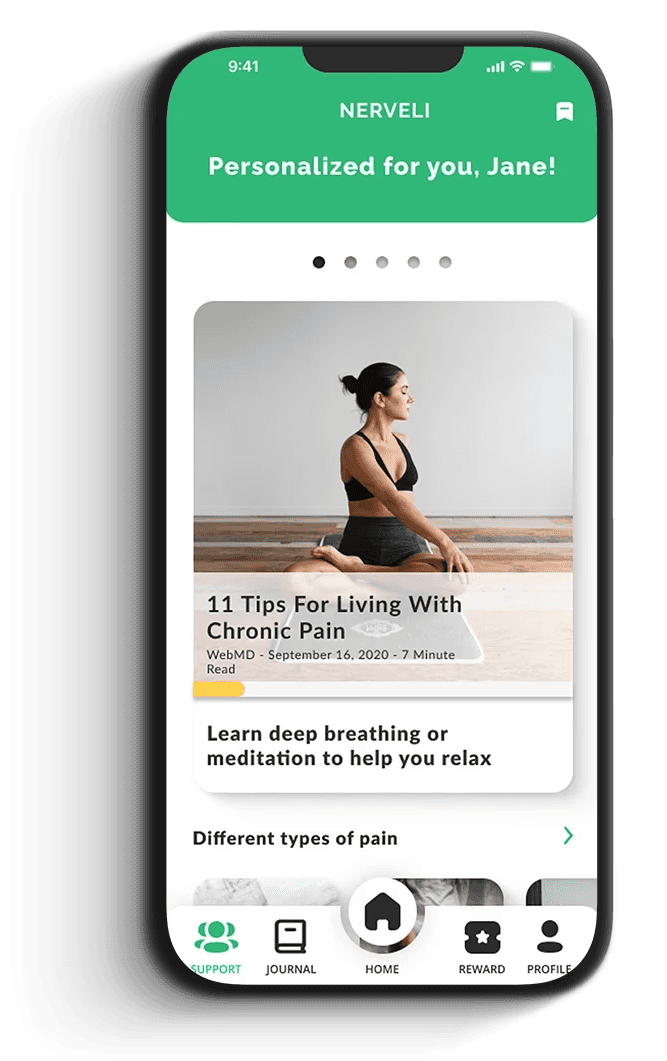
Nerveli's primary goals are to maintain a friendly and empathetic approach, utilize medically credible treatments and sources, and provide a rewarding and reliable experience for users.
Discovery
Developing the Nerveli Pain Assessment (NPA)
Quantitative sensory testing (QST) is a panel of diagnostic tests used to assess somatosensory function, in the context of research and as a supplemental tool in the diagnosis of somatosensory disorders, including pain insensitivity, painless and painful neuropathy.
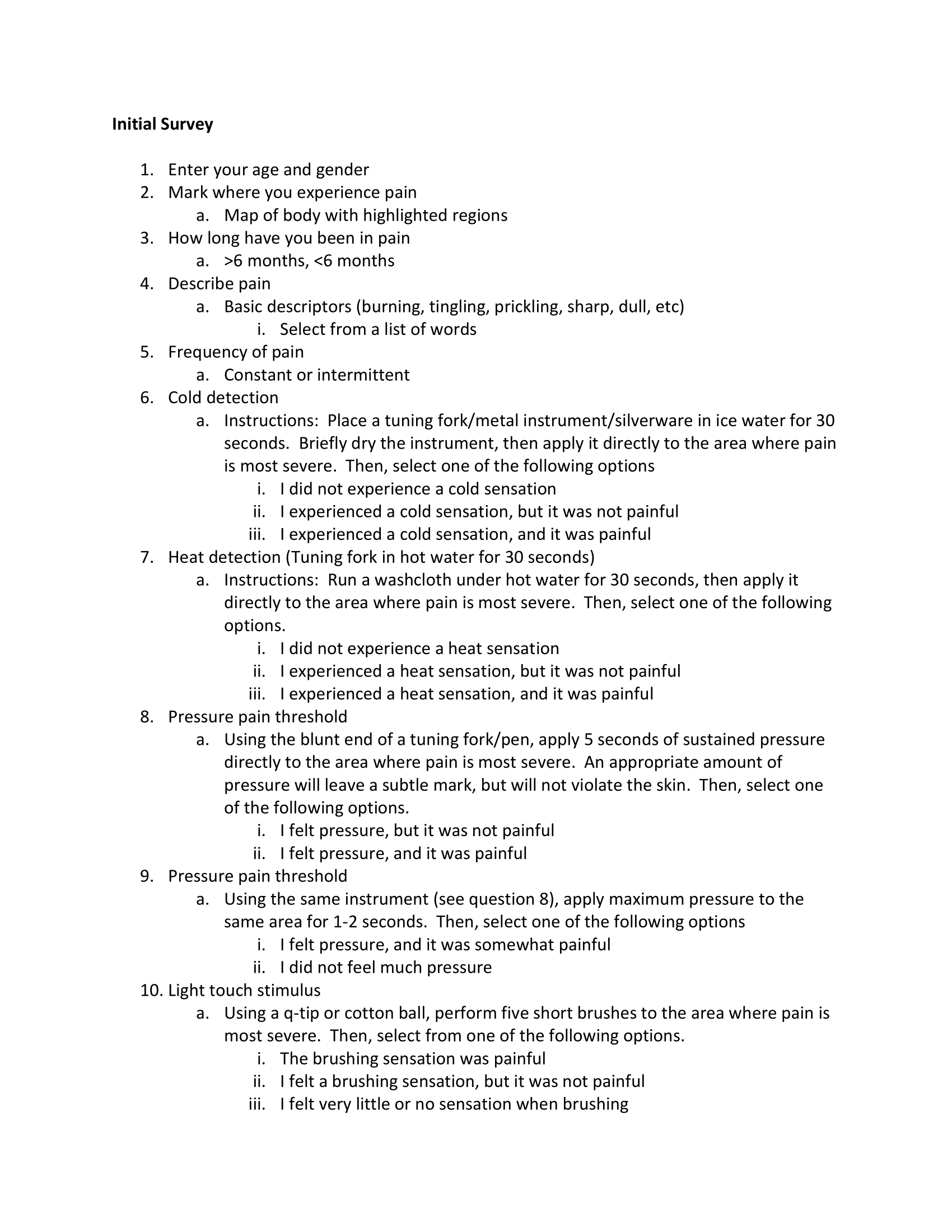
This survey is the central pillar supporting all of the features within Nerveli. Its goal is to gather information from the user in order to make an informed medical diagnosis and provide the user with personalized and accurate support options.
Working alongside doctors from the Center for Advanced Pain Studies at UT Dallas, a new and unique QST survey was developed, dubbed the Nerveli Pain Assessment. We worked closely with the client to ensure the instructions were friendly, easily understandable, and medically accurate.
From this discussion also came the decision to include video demonstrations for some of the tests necessary for the NPA.
Competitive Analysis
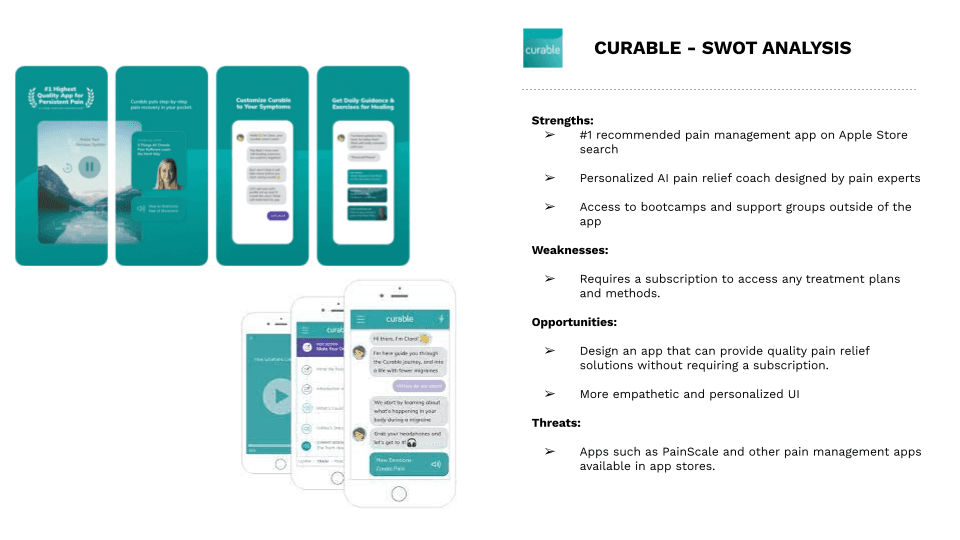
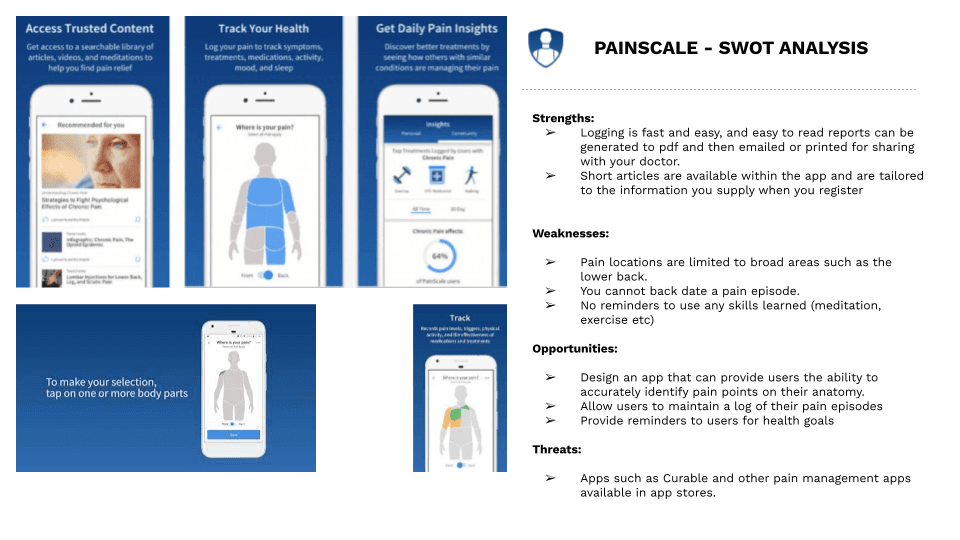
The first step in my design process was to research similar wellness apps, and apps featuring rewards systems, currently in the market. I did an analysis of two competitors: Curable and PainScale.
User Personas
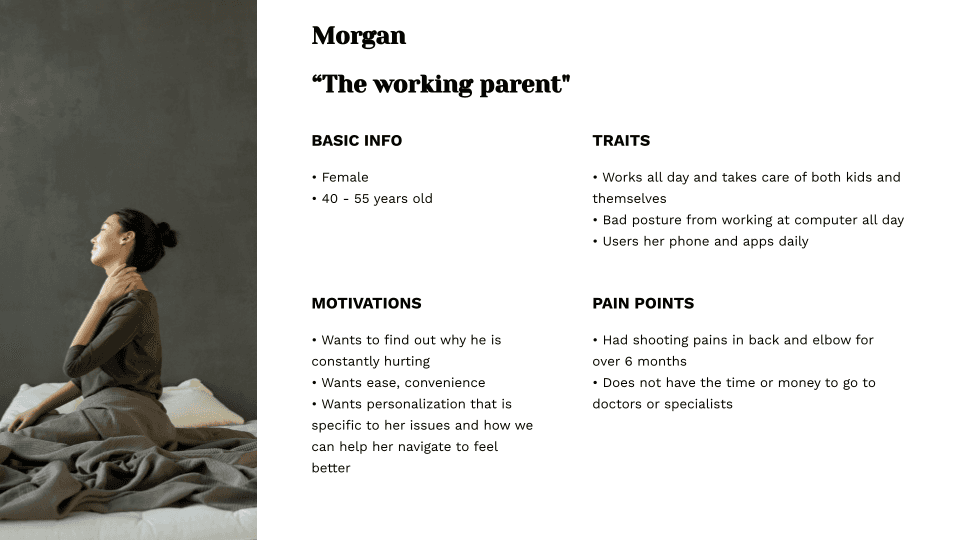
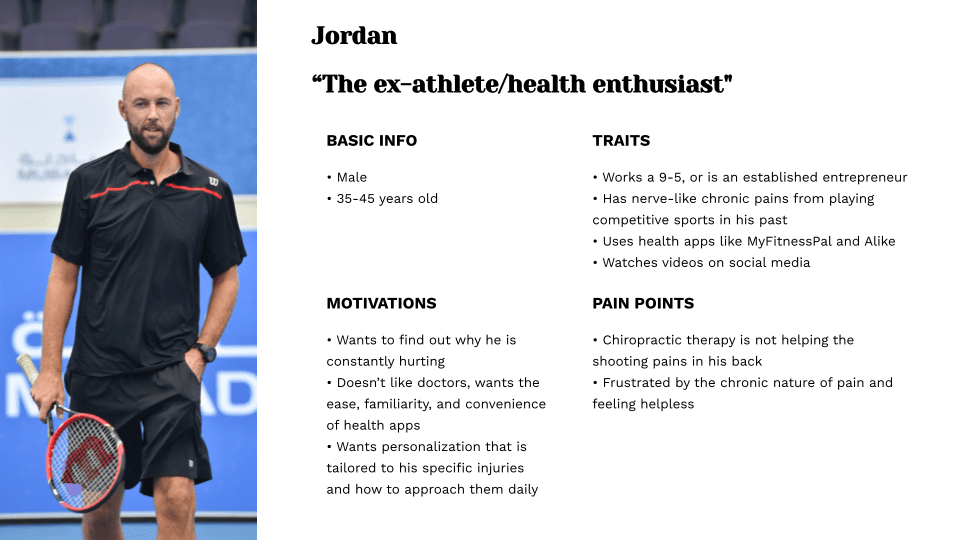
After completing a competitive analysis, we used interviews conducted by neurologists at the University of Texas at Dallas on 20 people suffering from chronic pain to better understand their needs and goals.
I crafted these user personas based on the provided user research that helped paint a clear pictures of users' goals, needs, and behaviors
Branding
The Color Green
Did you know exposure to green light may reduce pain? According to Texas Medical, green light has been proven to make a bit of a difference in reducing pain for people experiencing neuropathic pain.
By utilizing colors and research to develop the branding and style guide, we were able to create a meaningful and cohesive intention with our design. The stakeholders had a specific vision and we as a team had the challenge to create designs within those restraints.
Typography
Raleway and Lato, both sans-serif typefaces, were selected as the header and body fonts respectively. These fonts showcased a clean and modern look while providing easy readability.

Color Styles
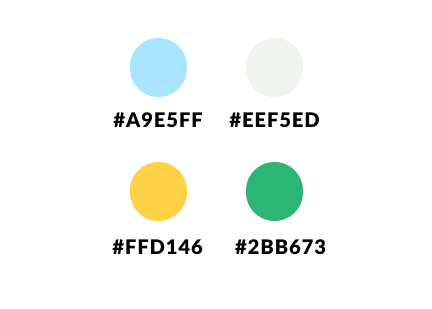
This is the final color palette decided upon by the team after client feedback. This palette includes the desired green shades along with a vibrant yellow for accentuating designs and a soft blue to add variety.
Design System
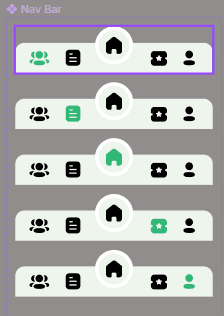
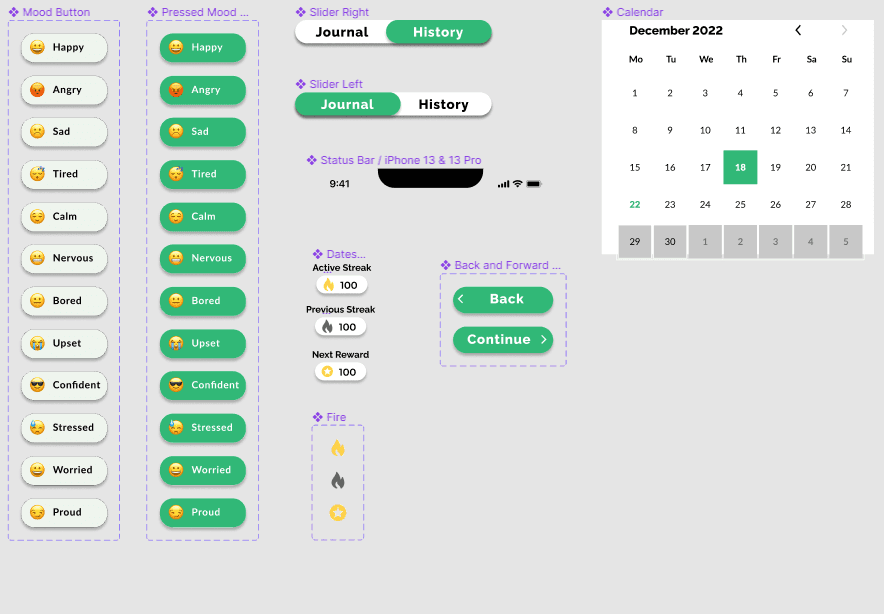
Examples of different components, including badge states, buttons, tabs, icons, and a navigation menu.
Design
Wireframes
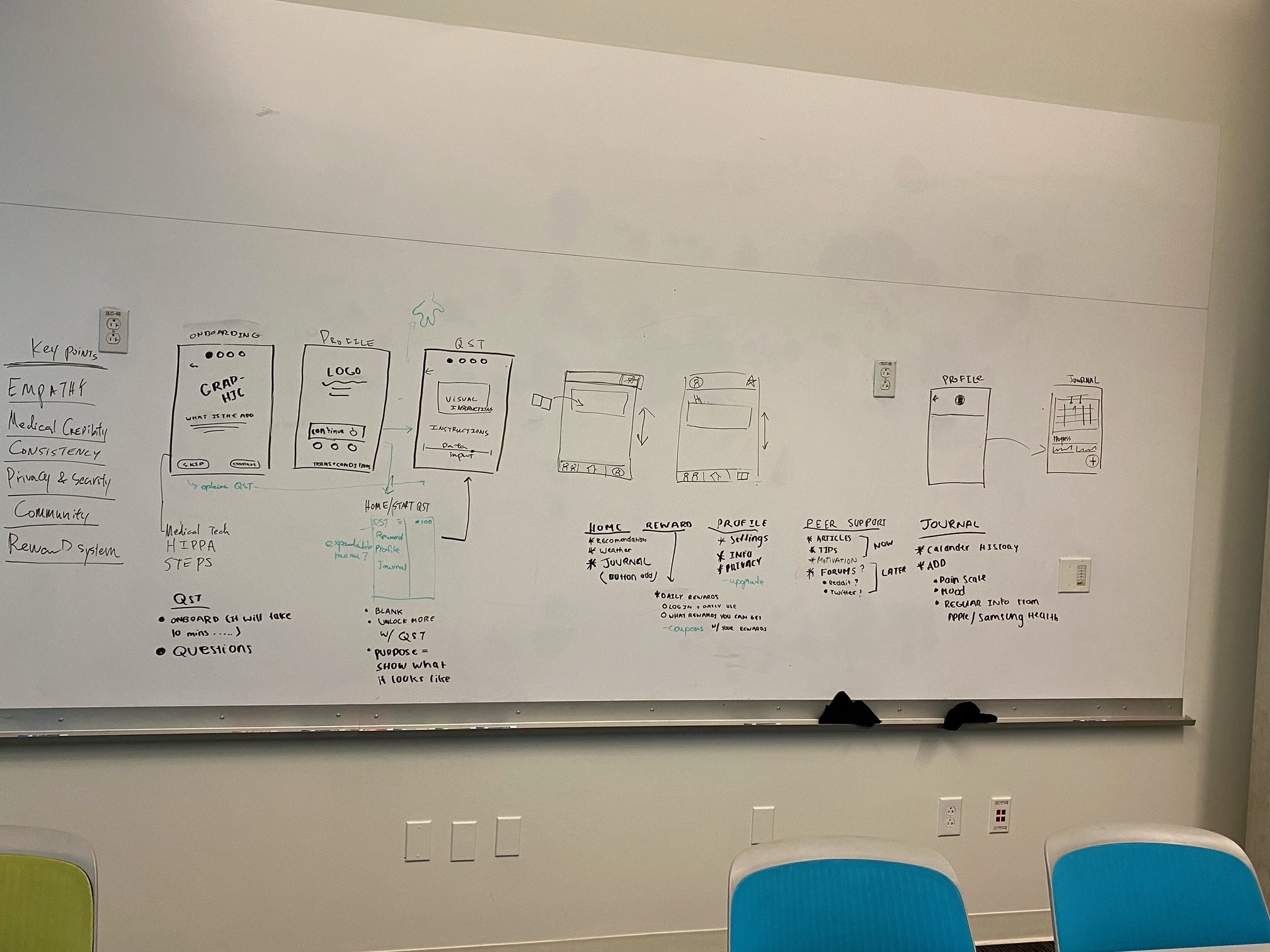
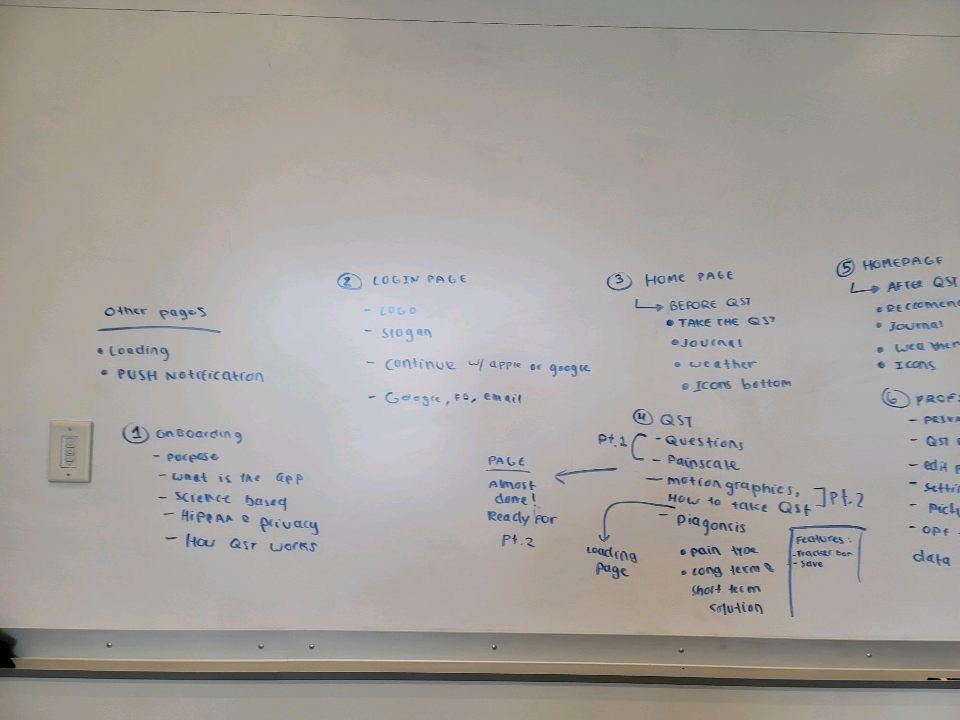
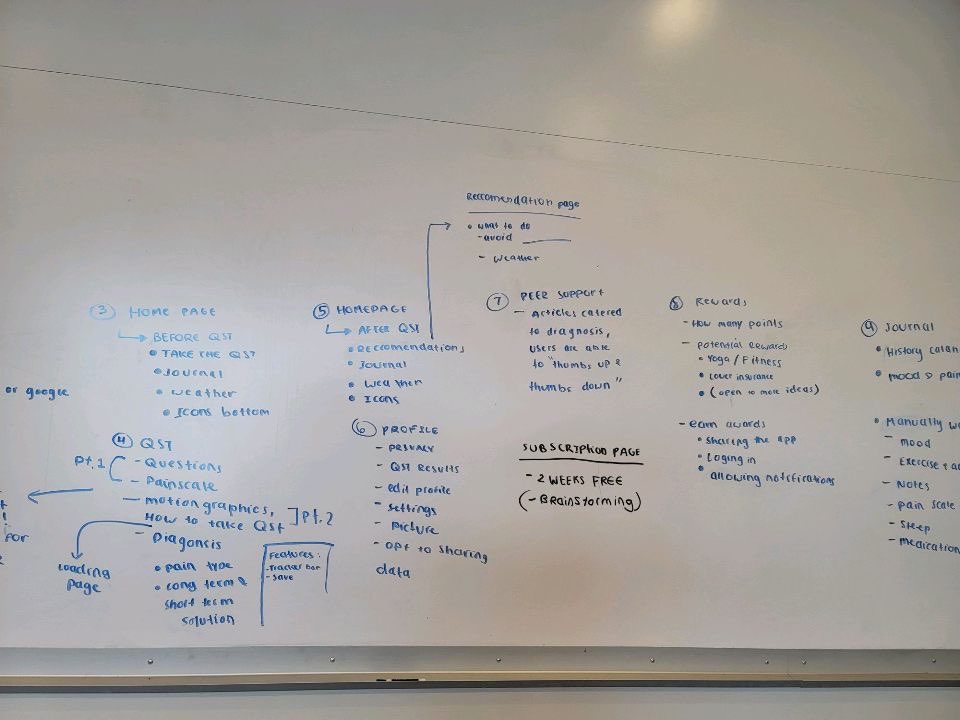
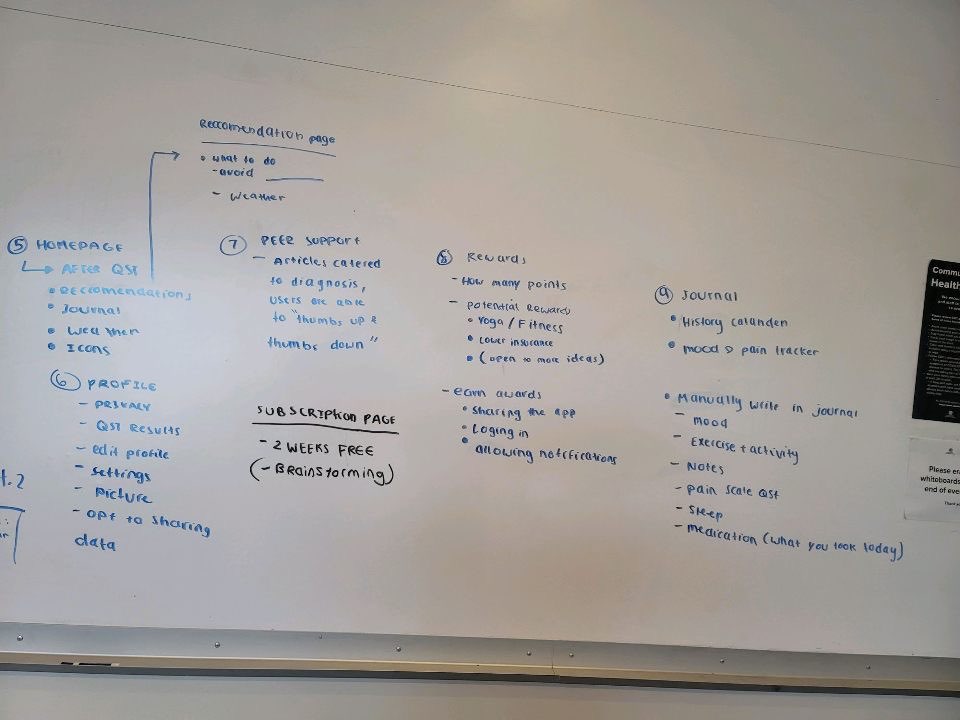
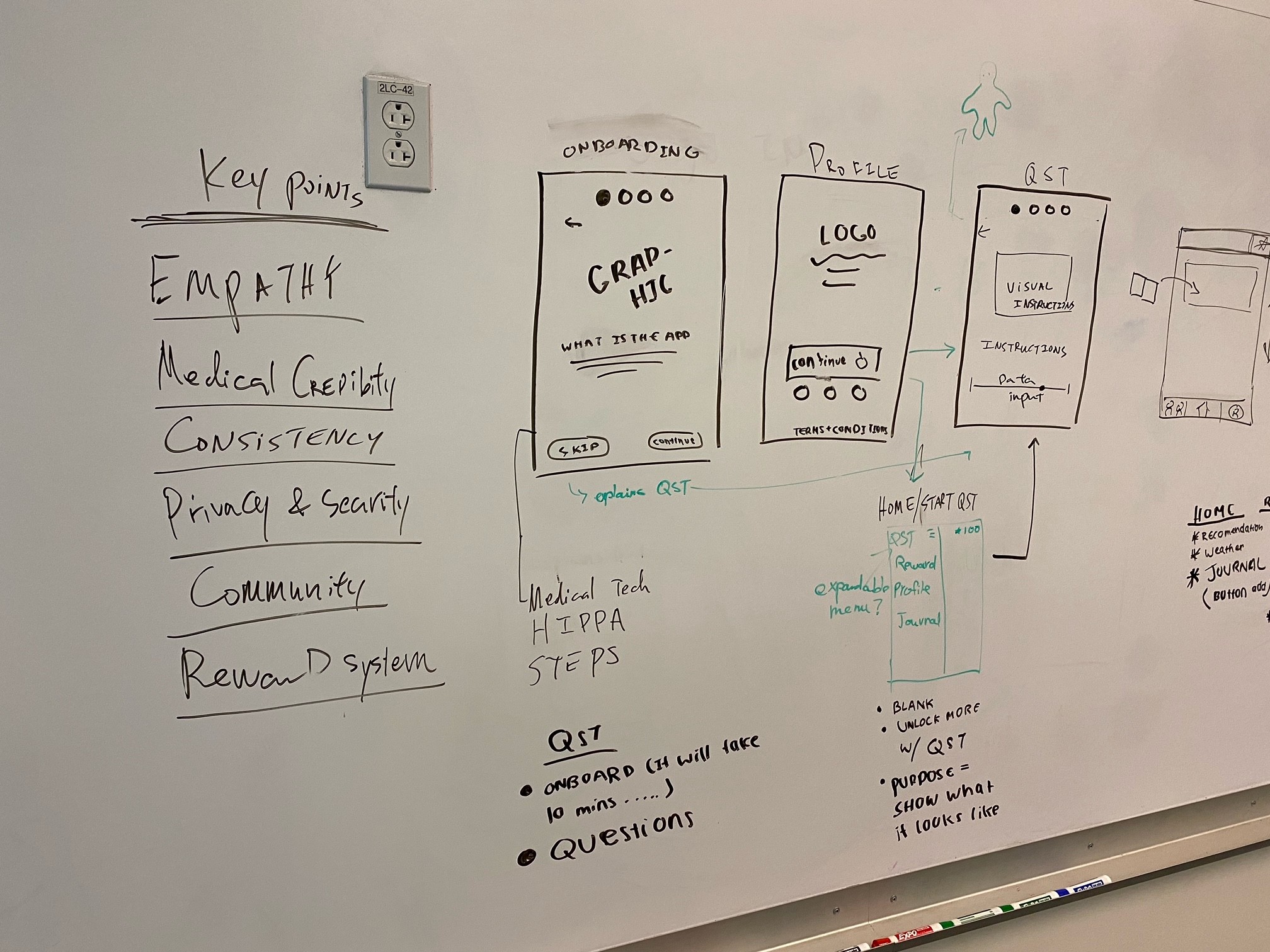
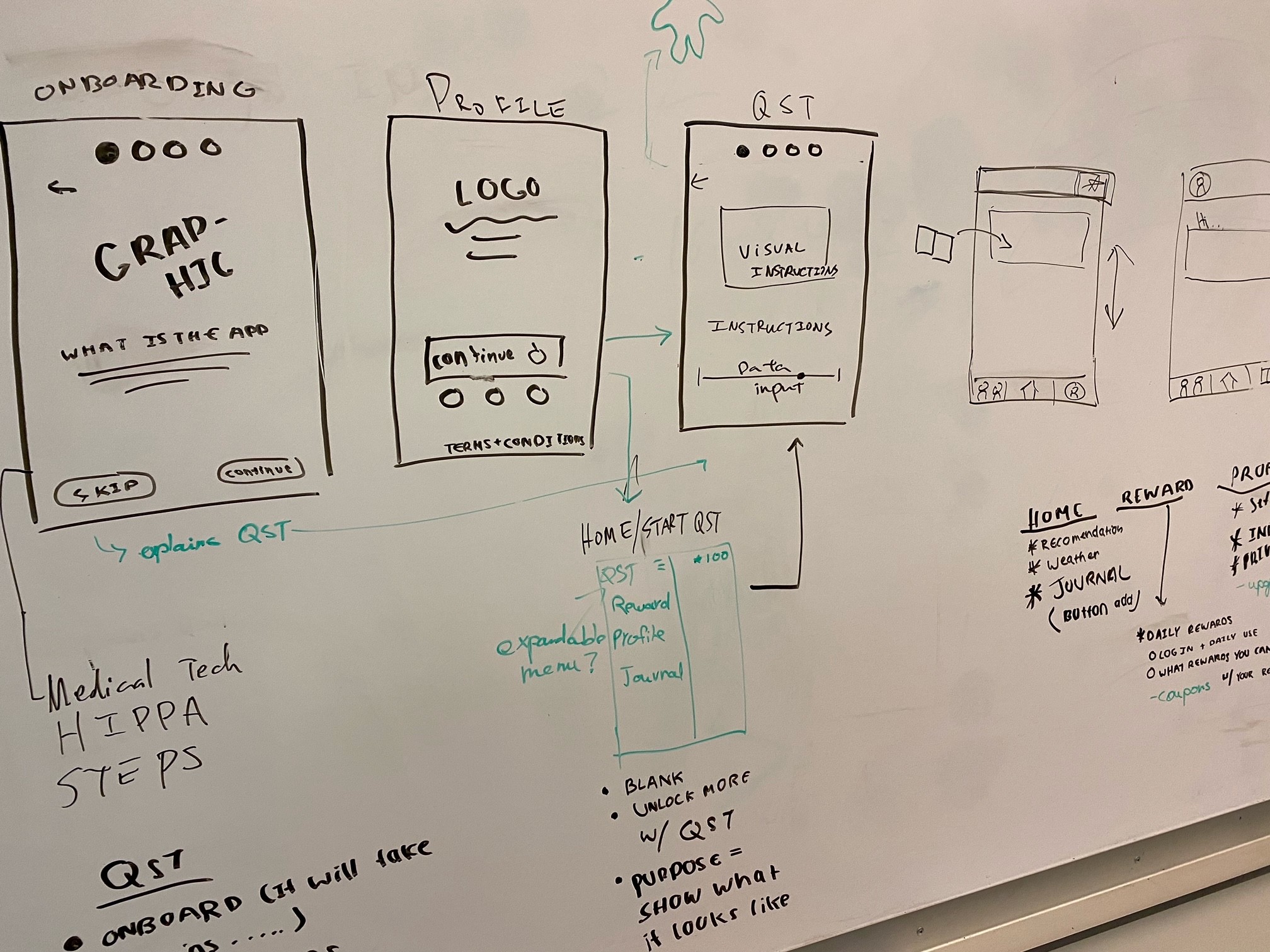
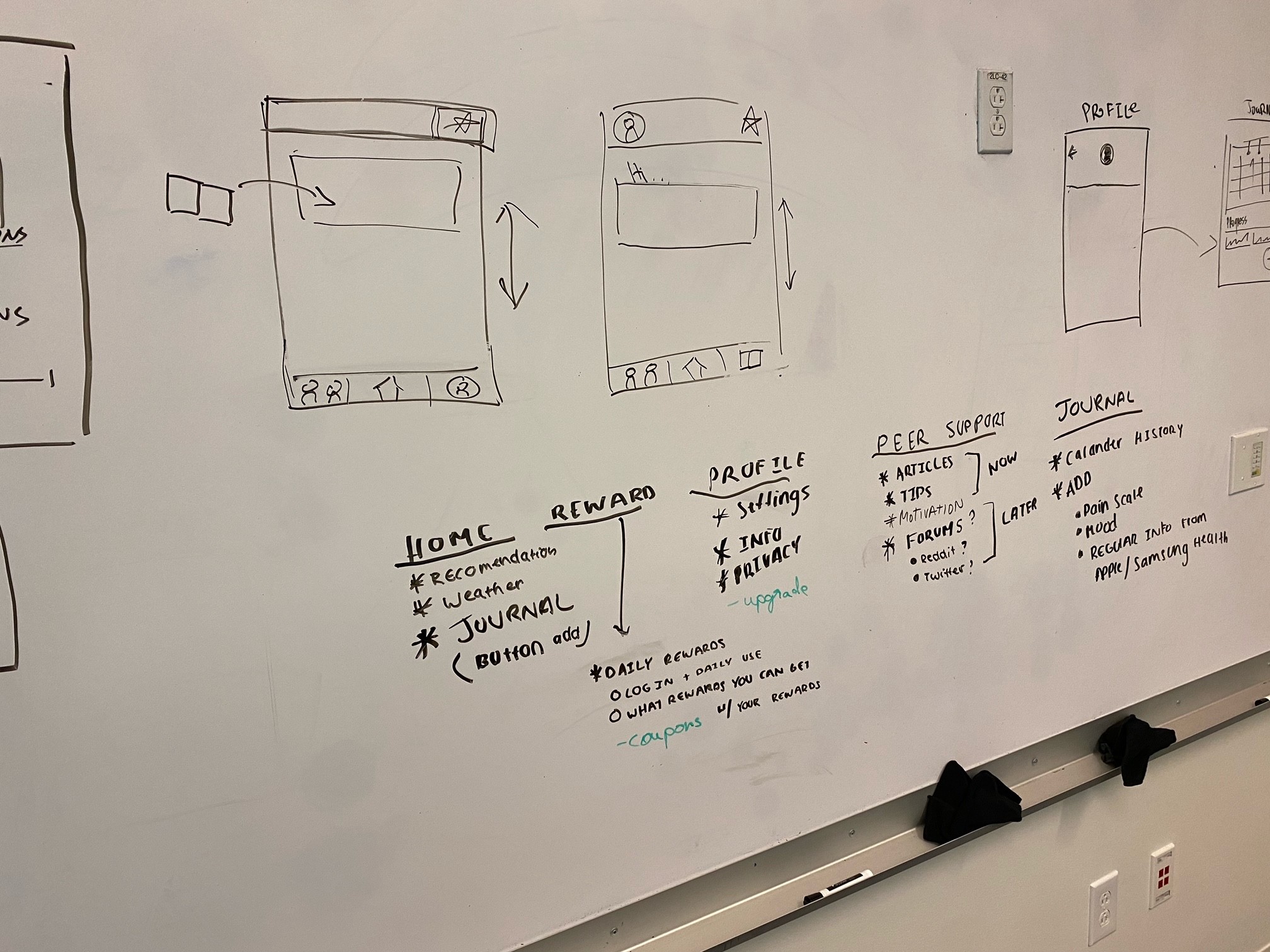
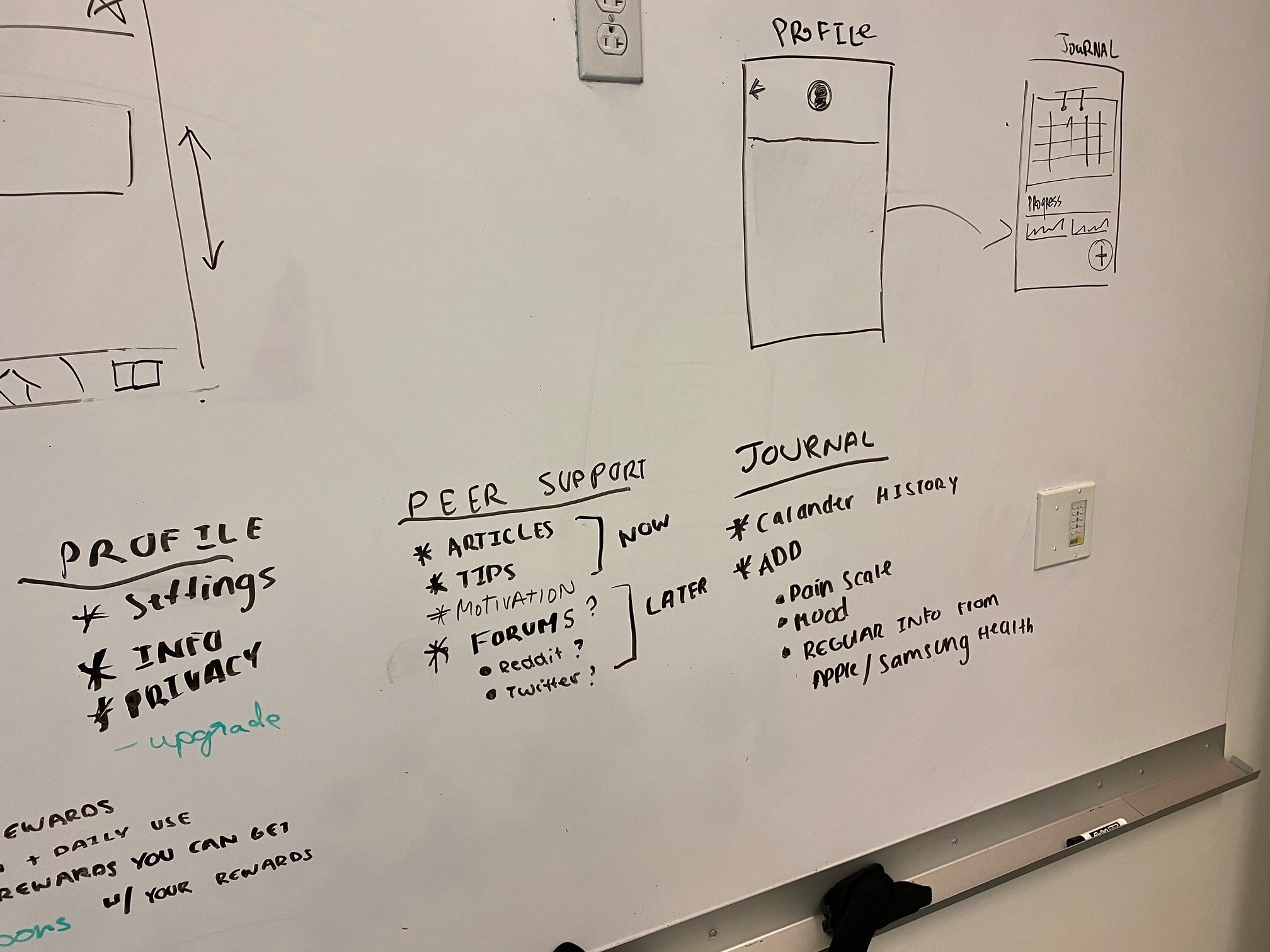
We started brainstorming and sketching out the layout of our application. We outlined the flow of our app, identifying each major screen and what features we wanted to build out. By doing this, we were able to understand which screens were necessary and were able to collaboratively give input, understand the workflow, and assign tasks.
Prototyping
We started brainstorming and sketching out the layout of our application. We outlined the flow of our app, identifying each major screen and what features we wanted to build out. By doing this, we were able to understand which screens were necessary and were able to collaboratively give input, understand the workflow, and assign tasks.
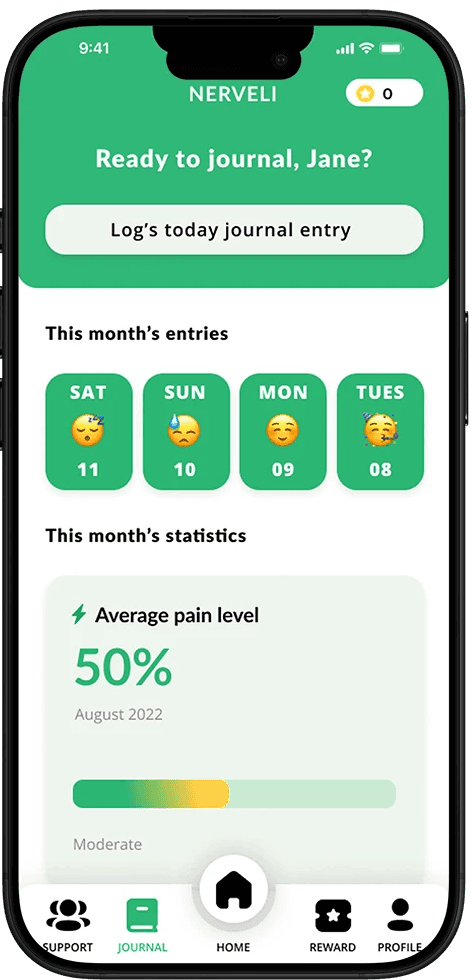
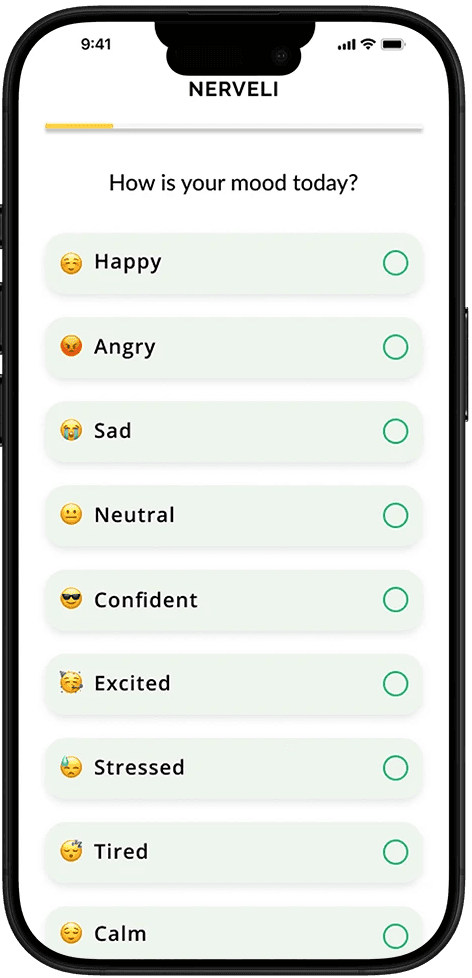
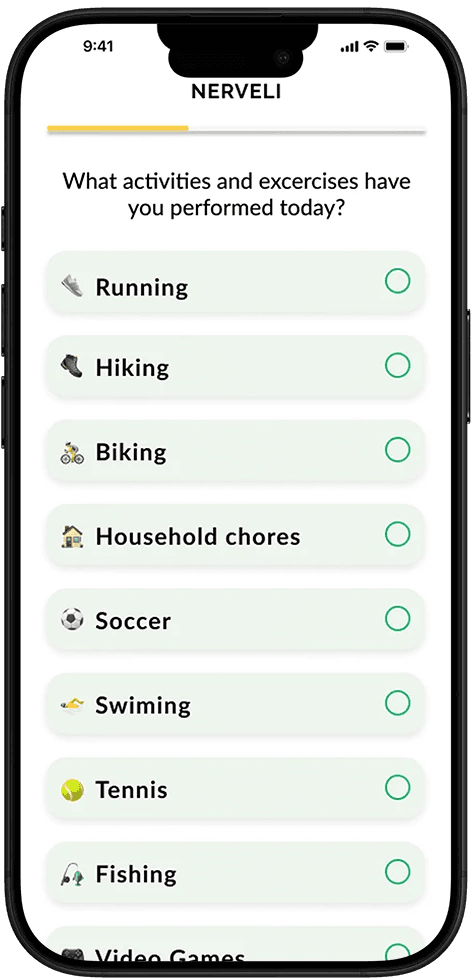
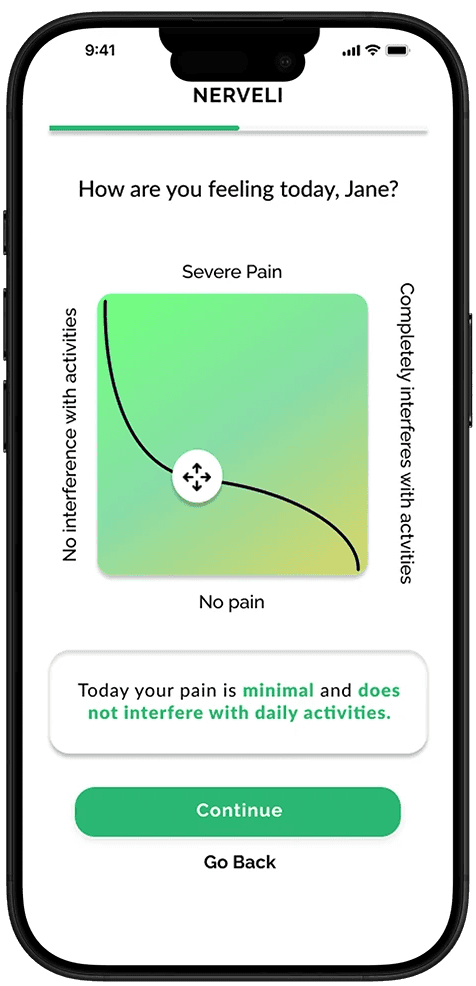
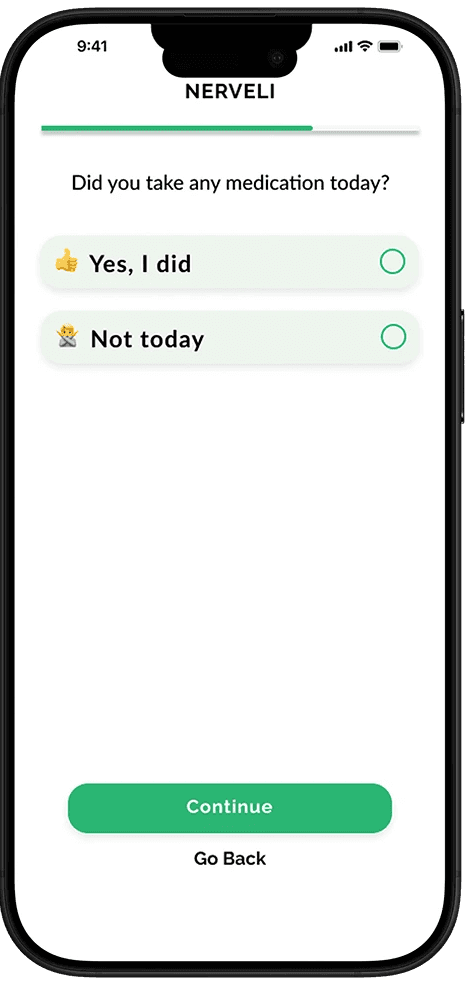
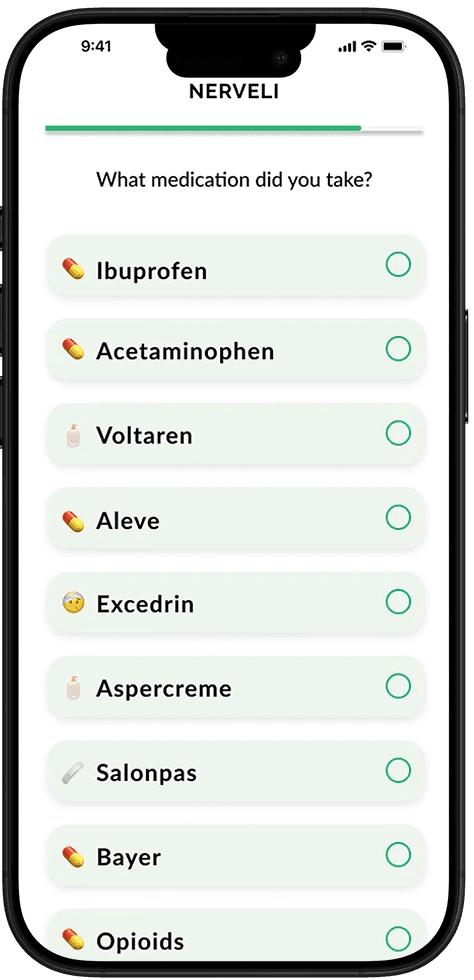
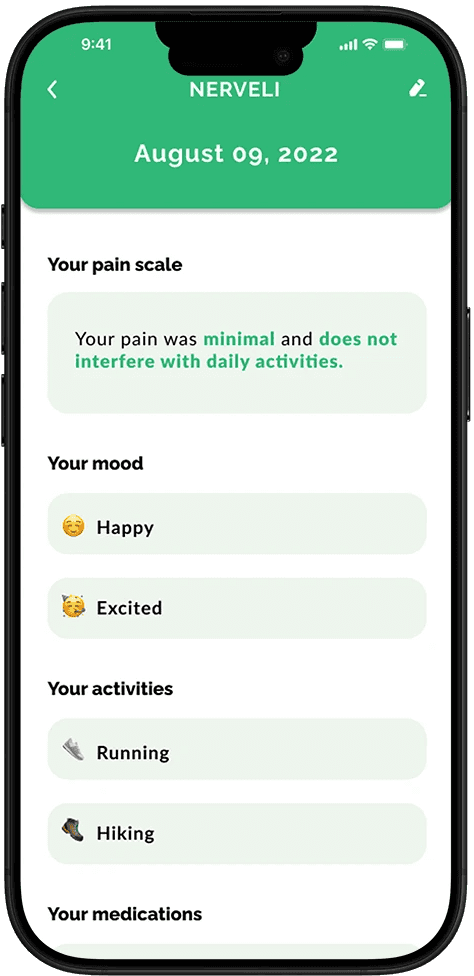
These screens showcase the high-fidelity versions of the user journal.
Final Thoughts
What can we improve?
Due to time constraints we were unable to conduct proper user-testing sessions outside of the team and receive extensive feedback.
Implementing an interactive 3D model for identifying pain location during the NPA survey. This was primarily limited by the functionality of Figma.
A series of short videos, either live-action or animated, demonstrating how to properly perform tests during the NPA survey.
We also would have liked to include additional animations and interactions within the app featuring the Nerveli health companion.